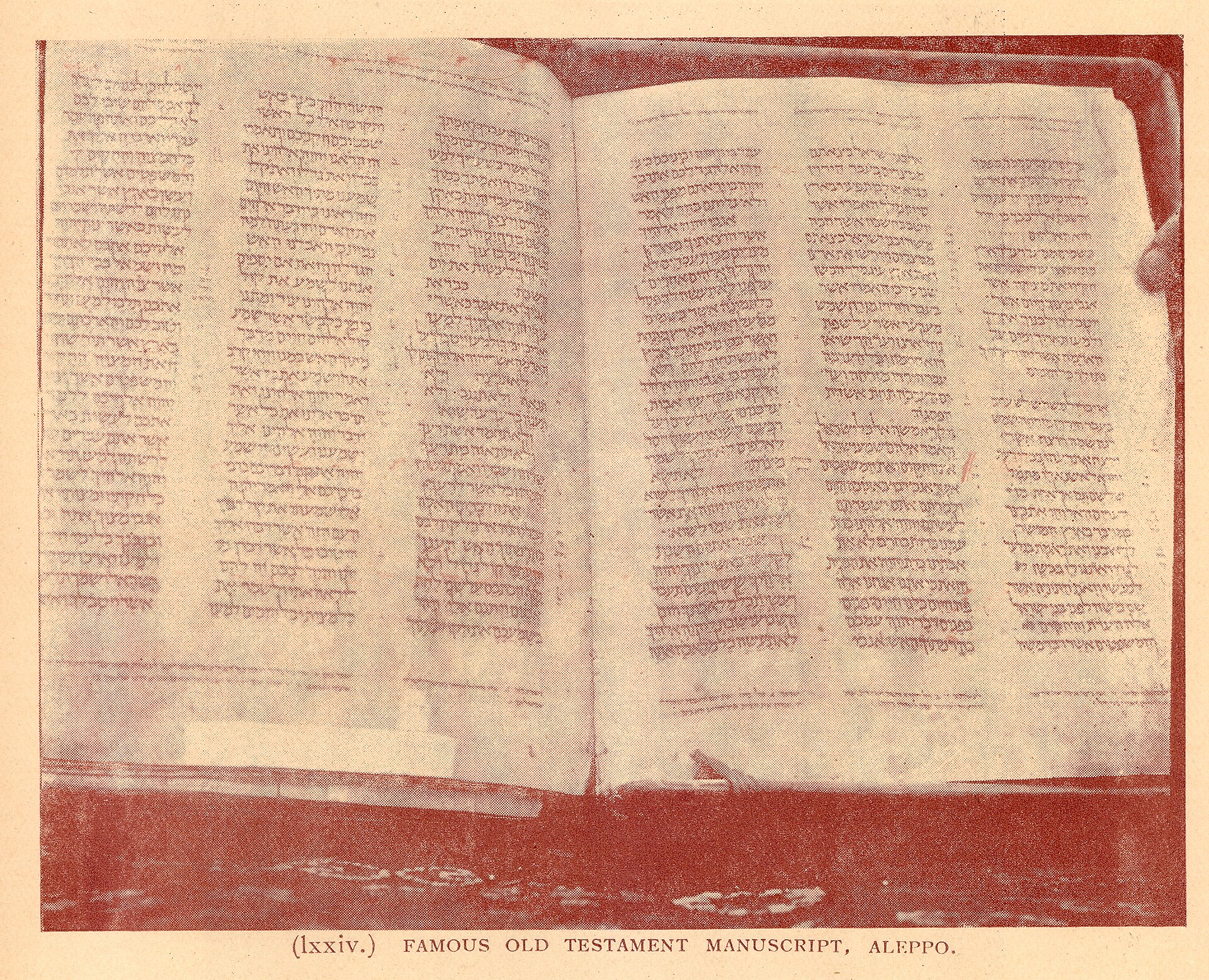
INV. 018 · Manuscript
The Aleppo Codex: the Ten Commandments in Deuteronomy
Page of the Aleppo Codex, the earliest known manuscript containing the whole Hebrew Bible. According to the book, riots in Syria in 1947 damaged it, but most of it survived. The photograph predates the damage.
Editorial note: Date, institution and provenance come only from the Wikimedia Commons record and have not yet been checked against the institution's catalogue.
- Type
- Manuscript
- Nature
- Ancient objectThe object itself dates from the period indicated.
- Date of the object
- about 930 CEDate from the book: copied about 930 CE. The Commons photograph dates to 1909 (J. Segall).
- Depicts
- Page with the Ten Commandments of Deuteronomy 5.
- Institution
- Santuário do Livro, Museu de Israel
- Image
- J. Segall (1909)
- Licence
- Domínio público
- Retrieved
- Commons API, 2026-10-14
Sourced historical context
The Aleppo Codex, copied about 930 CE, is the earliest known manuscript containing the entire Hebrew Bible. Riots in Syria in 1947 harmed it (on the page shown in the book the bottom right corner has been burned off), yet most of it survived. The Bible contains two versions of the Ten Commandments, in Exodus 20 and Deuteronomy 5, nearly the same but varying in small ways, among them the wording of the Sabbath command: Exodus says to 'remember' the Sabbath day, Deuteronomy to 'keep' or 'guard' it. For modern scholars the two versions are one more doublet in the Torah, evidence that the text combines material from different sources.