Skip to content
ZAKHORIUM

Digital museum of Jewish history15 exhibitions · verified sources

The Atlas shows where. The halls tell how and why.

Zakhorium: a digital museum of Jewish history

זכוריום

Walk through Jewish history in exhibitions: events, objects and claims, always with the sources in plain sight.

Scroll to enter the exhibitions · use the index to jump between halls

▮ building the globe
Open the globe →
Ancient Israel and Other Ancestors

Hall 011207–586 BCE

Ancient Israel and Other Ancestors

From Canaan to the Babylonian Exile

1207–586 BCE

A critical reconstruction of Israelite origins: patriarchal and Exodus traditions, Israel's local emergence in Canaan, the kingdoms of Israel and Judah, Assyrian and Babylonian conquest, and the gradual transformation of Yahweh worship.

A large stone stele covered with lines of hieroglyphs.

Object

Merneptah Stele

1207 BCE follows the book's chronology box and timeline.

1207 BCE

1207BCE

Israel on the Merneptah Stele

An Egyptian inscription from 1207 BCE provides the earliest known external reference to Israel, understood as a people in Canaan.

Open event

c. 1020 BCE to c. 930 BCE

1020BCE

Rise of Israelite monarchy

The Bible describes a shift from local leaders to Saul, David and Solomon; the existence and scale of a united kingdom remain debated.

Open event

Cited statement

A people named 'Israel' already lived in Canaan during the thirteenth century BCE. A precisely datable stele preserves their name in a victory song commissioned during the Egyptian ruler Merneptah's reign, about 1213 to 1203 BCE. The book's timeline therefore places Israel in Canaan by 1207 BCE.

Figures in this hall

Continue in the full exhibition

13 further events in this period.

Passage

Next: Becoming the People of the Book

587–332 BCE

Advance to the next hall →
Becoming the People of the Book

Hall 02587–332 BCE

Becoming the People of the Book

From the Babylonian Exile to Persia

587–332 BCE

How, after the Babylonian conquest, the Judahites became the people of the Book: the Elephantine community, Persian rule and the province of Yehud, Ezra's mission, the formation of the canon and the composition of the Bible, and what it teaches and asks of its readers.

Cited statement

The chapter opens with a question: at what point did the Israelites of scripture, the inhabitants of the kingdom of Judah in the south, become what we now call Jews, and what warrants changing the name we use for them?

Clay cylinder covered in cuneiform writing, in a museum case.

Object

The Cyrus Cylinder

The Commons file title gives 'mid 500s BC'; the book speaks of a Babylonian text of Cyrus's own time.

Continue in the full exhibition

30 further events in this period.

Passage

Next: Jews and Greeks

331–63 BCE

Advance to the next hall →
Jews and Greeks

Hall 03331–63 BCE

Jews and Greeks

From Alexander to the Hasmoneans

331–63 BCE

How the Jews of Judea and the diaspora responded to Greek rule and Greek culture: adaptation, resistance and, almost always, a combination of the two. From Ptolemaic Alexandria to the Maccabean revolt, from the Hasmonean state to the religious groups that emerge in the second century BCE.

Mosaic with horsemen and soldiers in combat; on the left, Alexander on horseback.

Object

Alexander Mosaic (Battle of Issus)

Caption of figure 3.1 in Efron, Lehmann and Weitzman (p. 64).

Cited statement

Although the chapter's scope runs from the 300s BCE through the first, Greek influence on Jewish culture kept growing long after that.

Passage

Next: Between Caesar and God

63 BCE – 135 CE

Advance to the next hall →
Between Caesar and God
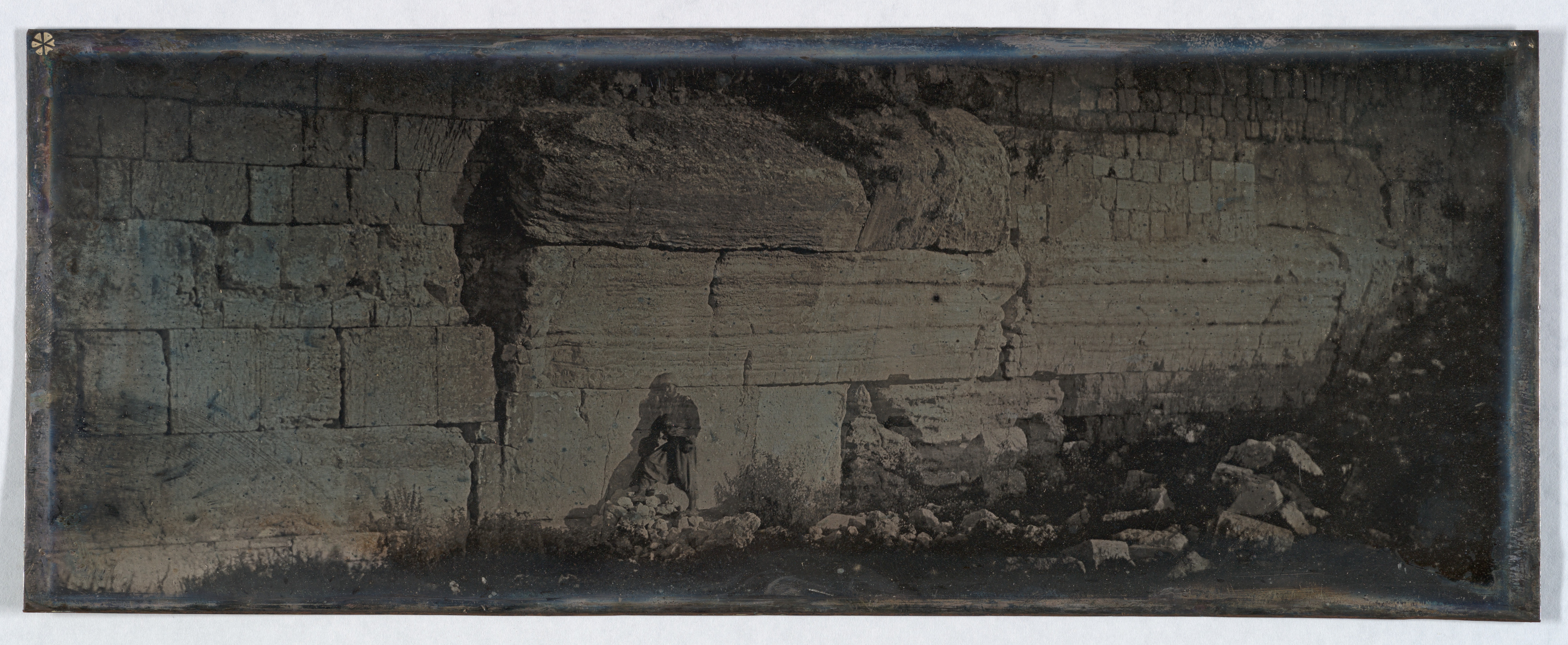
Early sepia photograph of the western wall of the Temple Mount, with the projecting stone of Robinson's Arch.

Object

Southwest corner of the Temple Mount

1844 photograph (Girault de Prangey) of the Robinson's Arch stub on the Herodian platform walls, before modern excavations.

Hall 0463 BCE – 135 CE

Between Caesar and God

From Pompey to Bar Kochba

63 BCE – 135 CE

How Jews lived under Rome: collaboration, open or ambiguous resistance, departure. From the Herodians to the three great revolts, from the loss of the Temple to new forms of religious life and the birth of Christianity within Jewish culture.

20 BCEOne of the most awe-inspiring sights of the day

20BCE

Herod expands the Temple

From 20 BCE, Herod demolished the Temple and built a new one atop a gigantic platform, a project that both gave work to thousands and bolstered his image as a pious king.

Open event

between 4 BCE and 6 CE to 30 CEA Galilean Jew between Caesar and God

4BCE

Jesus of Nazareth

A Jewish teacher and wonder-worker executed under Pilate, Jesus is almost beyond the historian's reach; his movement began as one more first-century Jewish current, rooted in the period's eschatological expectations.

Open event

Cited statement

The authors split the Roman period into two chapters. This one covers the first phase, from Pompey's conquest in 63 BCE to the revolts that end in 135 CE; the next follows Jewish culture up to the seventh century.

Continue in the full exhibition

19 further events in this period.

Passage

Next: From Temple to Talmud

70–642 CE

Advance to the next hall →
From Temple to Talmud

Hall 0570–642 CE

From Temple to Talmud

The rabbis in late antiquity

70–642 CE

How a small circle of sages, nearly invisible in their own time, transformed Judaism after the loss of the Temple. From the legend of Yavneh to the Mishnah, from the two Talmuds to the Geonim, in an increasingly Christian Palestine and a Babylonia under the Sasanians.

Cited statement

The chapter's scope runs from the Temple's destruction in 70 CE to the coming of the Islamic age.

Passage

Next: Under the Crescent

622–1258

Advance to the next hall →
Under the Crescent

Hall 06622–1258

Under the Crescent

Jews under medieval Islam

622–1258

An octagonal building clad in blue and white tiles, with a large golden dome, under a blue sky on a stone esplanade.

Object

The Dome of the Rock, Jerusalem

Caption of figure 6.1 in Efron, Lehmann and Weitzman (p. 162), which places construction under the Umayyad caliph Abd al-Malik (685 to 705). The tiled decoration visible today is later.

How Jews lived under the Crescent: dhimmi status and the Pact of Umar, the Geonim of Baghdad and the rise of the Babylonian tradition, the Karaites, the Cairo Genizah, the 'golden age' of Muslim Spain, philosophy from Saadya to Maimonides, and the everyday life of merchants, women and communities.

622–750 CEWhy this period opens with Muhammad

622CE

Islam and the Jewish Middle Ages

The rise of Islam in the seventh century created a single empire from the Atlantic to Central Asia and shifted the Jewish world's center of gravity, which is why the book opens the Jewish Middle Ages with it.

Open event

750–1040Justice by correspondence

750CE

The Geonic academies, the kallot and the responsa

The Sura and Pumbedita academies, which also served as a supreme court, gathered scholars at the kallot and asserted authority from afar through responsa, until they dissolved around 1040.

Open event

Cited statement

Gathering most Jews under Islamic rule is, for the authors, enough to justify the convention of dating the Jewish Middle Ages from the rise of Islam. The period also matches other major social and cultural shifts, such as the now central weight of rabbinic literature: the Mishnah and Talmud became a source of legal and religious authority.

Continue in the full exhibition

30 further events in this period.

Passage

Next: Under the Cross

c. 1000 to c. 1500

Advance to the next hall →
Under the Cross

Hall 07c. 1000 to c. 1500

Under the Cross

Jews in medieval Christian Europe

c. 1000 to c. 1500

How Jews lived under Christian rule: between Augustine's doctrine and the Crusades, the expulsions and the Black Death, but also among the rabbis of Ashkenaz, the flowering of Sefarad, Kabbalah and daily coexistence. A history that does not fit a mere chain of persecutions.

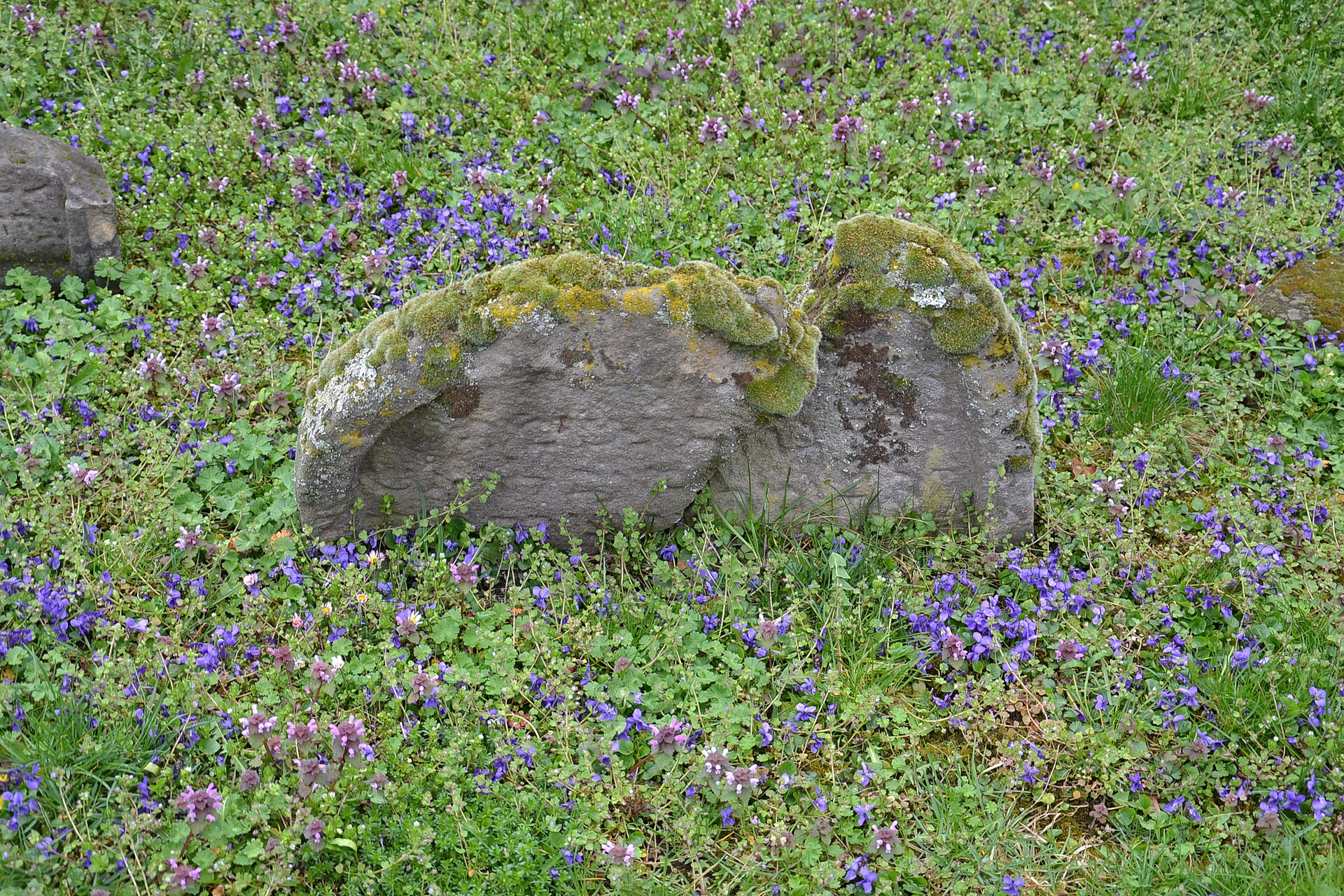
A moss-covered stone gravestone amid tall grass and flowers beneath trees.

Object

Heiliger Sand, the Jewish cemetery of Worms

The book does not mention the cemetery; the date of individual gravestones is not asserted here.

1095–1097Spring 1096

1095CE

The First Crusade and the Jews of the Rhineland

In spring 1096 crusaders attacked the Rhineland communities: about a thousand Jews died and many were forcibly baptized, but the communities recovered quickly.

Open event

1040–1303Talmud culture in Ashkenaz

1040CE

Rashi and the tosafists

From Troyes, Rashi commented on the Bible and the Talmud; his heirs, the tosafists, developed dialectical study, and in 1303 Asher ben Yehiel carried Ashkenazi learning to Toledo.

Open event

Cited statement

Splitting the medieval Jewish world between Islamic lands and Christendom has drawbacks. Communities on both sides shared a good deal: their legal standing came partly from Roman law, and cultural contact between the two areas was frequent, so each shaped the other.

Continue in the full exhibition

30 further events in this period.

Passage

Next: A Jewish Renaissance

1391 to c. 1700

Advance to the next hall →
A Jewish Renaissance

Hall 081391 to c. 1700

A Jewish Renaissance

Migration, print, and renewal in the early modern age

1391 to c. 1700

Expulsion and conversion dismantled medieval centers, yet new Jewish worlds flourished in the Ottoman Empire, Morocco, and Italy. Print, Safed Kabbalah, Renaissance science, and state pragmatism connected communities and transformed practice without erasing tradition. The Portuguese Inquisition of 1536 tied the kingdom to repression of New Christians in Brazil.

Cited statement

The 1492 expulsion capped a long Jewish departure from western Europe.

Open printed Hebrew page with a central text surrounded by commentaries.

Object

Page from Daniel Bomberg's Babylonian Talmud

Edition printed by Daniel Bomberg in Venice between 1519 and 1523.

Continue in the full exhibition

14 further events in this period.

Passage

Next: New Worlds, East and West

c. 1500 to c. 1750

Advance to the next hall →
New Worlds, East and West

Hall 09c. 1500 to c. 1750

New Worlds, East and West

New Jewish centers in Eastern Europe and the Atlantic

c. 1500 to c. 1750

Across Poland-Lithuania and Atlantic ports, Jews built new forms of autonomy, commerce, learning, and identity. Print, migration, and crisis connected distant communities, from Polish councils to Amsterdam's former conversos, New Christians in colonial Brazil, and the Sabbatian movement.

Representation of the Council of Four Lands

Object

Representation of the Council of Four Lands

Approximate date based on the object's identification.

Cited statement

Novinsky argues that recent research adds the Jewish origin of Paulista bandeirantes to understanding the conflict with Jesuit reductions.

Passage

Next: The State of the Jews, the Jews and the State

c. 1700 to 1917

Advance to the next hall →
The State of the Jews, the Jews and the State
Statistical map of the Pale of Settlement.

Object

Map of the Pale of Settlement

Map published in the Jewish Encyclopedia in 1905.

Hall 10c. 1700 to 1917

The State of the Jews, the Jews and the State

Emancipation, citizenship, and state power

c. 1700 to 1917

Modern citizenship dissolved older autonomies and opened unequal opportunities. France, Britain, Italy, the United States, the Ottoman Empire, and Russia produced distinct models combining rights, acculturation, surveillance, and coercion. Emancipation was never a single or linear process.

1789–1831

1789CE

French emancipation

The revolution granted individual citizenship first to Sephardim and then Ashkenazim.

Open event

1791–1917

1791CE

The Pale of Settlement

Russia concentrated millions of Jews in a vast western borderland.

Open event

Cited statement

Modernity includes consciously seeing the present as distinct from earlier eras.

Continue in the full exhibition

14 further events in this period.

Passage

Next: Modern Transformations

c. 1740 to c. 1908

Advance to the next hall →
Modern Transformations

Hall 11c. 1740 to c. 1908

Modern Transformations

Religious revivals, Enlightenment, and new Jewish movements

c. 1740 to c. 1908

Portrait of Moses Mendelssohn

Object

Portrait of Moses Mendelssohn

Approximate date based on the object's identification.

Imperial partitions, mystical revival, Talmudic study, Jewish Enlightenment, new literatures, and modern denominations fragmented and renewed Ashkenazi life. Jews recast tradition and identity through worship, schools, print, historical scholarship, architecture, and civic participation.

1758–1811

1758CE

Mendelssohn and Berlin Haskalah

Translation, periodicals, and philosophy sought to join Judaism with European culture.

Open event

1740–1760

1740CE

The Besht and Hasidism's origins

A small pietistic circle articulated a spirituality of divine presence in everyday life.

Open event

Cited statement

Jews did more than respond to modernity; they also helped shape it.

Continue in the full exhibition

6 further events in this period.

Passage

Next: The Politics of Being Jewish

c. 1800 to 1924

Advance to the next hall →
The Politics of Being Jewish

Hall 12c. 1800 to 1924

The Politics of Being Jewish

Antisemitism, Jewish parties, and mass migration

c. 1800 to 1924

Urbanization, racial and political antisemitism, and new ideologies transformed Jewish life. Socialism, diaspora autonomy, Zionism, philanthropy, and emigration offered competing answers to violence and exclusion.

Cited statement

World Jewry grew from roughly 2.7 million people in 1800 to more than 12 million by 1910.

Passage

Next: A World Upended

1914–1939

Advance to the next hall →
A World Upended

Hall 131914–1939

A World Upended

War, the interwar years, and the making of the Yishuv

1914–1939

The war destroyed empires and eastern communities, while the interwar years combined state antisemitism, intense secular culture, and an institutional Yishuv under the British mandate. In the Soviet Union and Muslim lands, new rights arrived together with Russification, nationalism, and secularization.

Balfour Declaration

Object

Balfour Declaration

Approximate date based on the object's identification.

Cited statement

The twentieth century joined social advances with violence on a new scale.

Passage

Next: The Holocaust

1933–1945

Advance to the next hall →
The Holocaust

Hall 141933–1945

The Holocaust

Persecution, ghettos, mass murder, and resistance

1933–1945

The Nazi regime dispossessed, isolated, and murdered the Jews of Europe. Ghettos, shootings, and killing centers destroyed Ashkenazi and Sephardi civilizations, while flight, documentation, and armed struggle showed that the victims were not passive.

Pale three-story house with columns at the entrance, a garden, and trees in front.

Object

Villa of the Wannsee Conference

The photograph is later. The date is that of the 20 January 1942 meeting in the house.

1919–1933

1919CE

Jews in Hitler's worldview

Hitler placed Jews at the center of a racial politics of vengeance and conquest.

Open event

1941–1943

1941CE

Wannsee and the extermination camps

In January 1942 the ministries took on murder in fixed camps in Poland.

Open event

Cited statement

From 1933 through 1945, Jews endured the worst disaster in their long past.

Continue in the full exhibition

15 further events in this period.

Passage

Next: Into the Present

1945–2017

Advance to the next hall →
Into the Present
Reading of the declaration of independence

Object

Reading of the declaration of independence

Year of the event or of publication, as given on the Commons record.

Hall 151945–2017

Into the Present

Israel, new diasporas, and a conflict without a settlement

1945–2017

After the Holocaust, Jewish centers shifted to Israel, the United States, and, for a time, the Soviet Union. Israeli sovereignty, Mizrahi immigration, and the conflict with the Palestinians redefined Jewish life, while new diasporas and forms of hostility filled the rest of the map.

1947–1949

1947CE

Partition and the 1948 war

The November 29 vote led to independence, an Arab invasion, and the uprooting of hundreds of thousands of Palestinians.

Open event

1945–1991

1945CE

Rebuilding after the Shoah

Survivors rebuilt families far from Europe, and the main Jewish population centers moved.

Open event

Cited statement

Most survivors answered the Shoah by marrying, raising children, and earning a living.

Continue in the full exhibition

17 further events in this period.

End of the exhibition route

§ 16Instruments

Other ways in

The exhibitions tell the narrative. These instruments deepen the map, the collection and the method.

§ 17Historiography

Where historians disagree, we show the disagreement

Interpretations appear side by side, attributed to those who hold them; the source’s assessment is kept separate.

Scholarly debate

Why did Antiochus IV persecute Jewish religious practice?

5 positions · no single answer · take a seat →

  1. A

    Mental instability

    Some scholars

    On this view, Antiochus suffered from a mental disorder. The thesis draws support from his reputation for bizarre behavior and from a contemporary joke that turned his title Epiphanes into Epimanes, 'the madman'.

  2. B

    Claim to divinity

    A hypothesis mentioned by the authors

    As the title Epiphanes ('god manifest') suggests, he may have considered himself divine and resented the Jews' failure to worship him, as the emperor Caligula would later do.

  3. C

    Anti-Jewish prejudice

    Apion, a Greek writer of the first century CE

    According to Apion, Antiochus acted out of indignation at supposed Jewish barbarity (the kidnapping and sacrifice of young Greeks). The authors judge that the account reveals more about Apion's prejudice than about the king's motives, and note that it anticipates the medieval blood libel.

  4. D

    Pragmatic motives

    Other scholars

    On this view, the king acted for financial, political or military reasons: to reassert himself after his humiliating withdrawal from Egypt under Roman pressure, or to obtain the Temple's resources.

  5. E

    Internal Jewish conflict

    Elias Bickerman

    On this reading, Antiochus became entangled in a conflict between cosmopolitan reformers (the priests Jason and Menelaus) and a religiously conservative faction. The idea of banning circumcision and the Sabbath would have come from the reformers, and the revolt would have been primarily a civil war.

The source’s assessmentIn the view of Efron, Lehmann and Weitzman, several of these theories have some support, but none fully convinces, because they rely on suspect sources and a great deal of speculation.

§ 18Method

How to read the exhibitions

Every statement carries a numbered marker. The symbol shows the kind of evidence; the popover shows the printed page and the section of the work. The Atlas remains the spatial instrument: open it from each hall.

Method and project status →
  • Documented evidenceAttested by contemporary evidence: texts, inscriptions, coins, papyri or archaeology.
  • Scholarly reconstructionHistorians' inference from indirect evidence.
  • Tradition or narrativeA literary, traditional or religious account; significant in itself, but not independently verified.
  • Contested interpretationScholars explicitly disagree; see the positions in the debate.
  • Illustrative reconstructionA hypothesis or visual scheme to guide reading; not a historical claim.